Today in History
Lara goes past Border in Adelaide
Lara ended the first day unbeaten on 202; West Indies were 352 for seven, a familiar tale: he had made most of the runs, and Australia had taken nearly everybody else.
On the morning of 26 November 2005, Lara swept Glenn McGrath for four to reach 214 in the innings and 11,175 runs in Test cricket. Border's record had stood for more than eleven years. The Adelaide crowd rose, Australia applauded, and Lara removed his helmet to acknowledge a landmark achieved against the country whose former captain had set it.
He went on to score 226 before McGrath bowled him. The West Indies were dismissed for 405, and Lara contributed 55.8 percent of the total. Even history-making knocks came with a workload.
The record collector
Lara's relationship with records was unusual because his journey was not linear. His career contained absences, slumps, captaincy crises, and series in which the burden of West Indies batting appeared to move permanently into his kit bag.
When he was in command, however, he did not merely pass landmarks. He occupied them.
In 1994 he made 375 against England to break Garry Sobers' world record. Weeks later he scored 501 not out for Warwickshire, the highest first-class innings. Matthew Hayden passed the Test record with 380 in 2003, so Lara reclaimed it with 400 not out in Antigua in 2004.
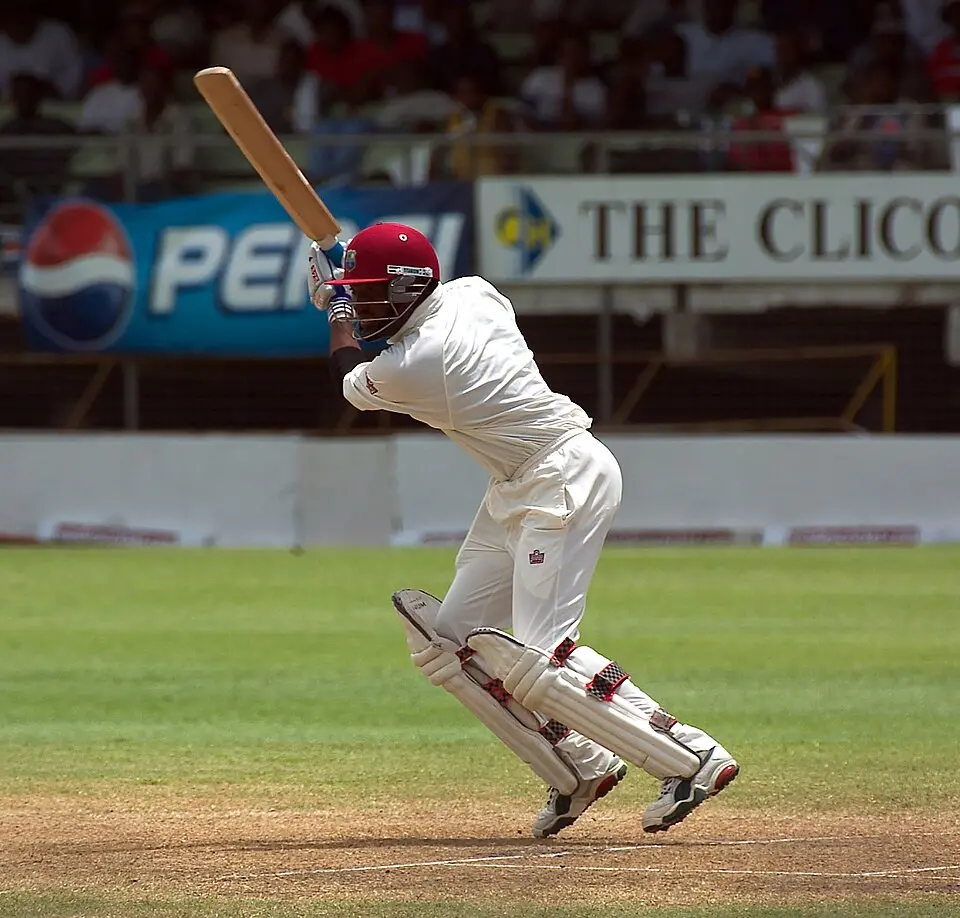
Becoming the lead run-scorer in Tests was different, however. It rewarded longevity, resilience, and the ability to return after each difficult chapter. Lara called it a testimony to the years he had survived in international cricket.
He required 214 runs in Adelaide because the earlier matches of the series had only brought scores of 14, 30, 13, and 45. Australia led 2-0 and had repeatedly exposed the fragility around him. The third Test looked like another unequal contest until Lara produced a double-century against McGrath, Brett Lee, Shane Warne, and Stuart MacGill.
West Indies still lost by seven wickets. Warne took six in the second innings, and Australia completed a 3-0 series victory. Lara's record therefore resisted easy triumphalism. It was a magnificent personal performance despite another team defeat, highlighting the central tension of his later career.
First, briefly
Lara held the aggregate record for almost three years. Sachin Tendulkar passed him in October 2008 after Lara had retired and eventually moved far beyond both Lara and Border.
That brevity does not diminish Adelaide. For a time, one West Indian batsman held Test cricket's career run record and its highest individual score. The two marks reflected opposite gifts: endurance across 131 Tests, and the rare ability to make a single innings feel like an entire world of its own.
There was also a Caribbean succession in the moment. Sobers had held the individual record for 36 years before Lara. George Headley, the Three Ws, Sobers, Richards, and Lara formed no simple line, but each generation had produced a batsman capable of defining the world's standard.
By 2005 West Indies were no longer setting the standard as a team, but Lara remained an exception large enough to appear on the global record board.
He passed Border with a sweep, made 226 out of 405, and walked off to an Australian standing ovation. The series belonged entirely to the hosts. Yet for one long innings, the history was his.
Source