Today in History
Collie Smith and the future that never arrived
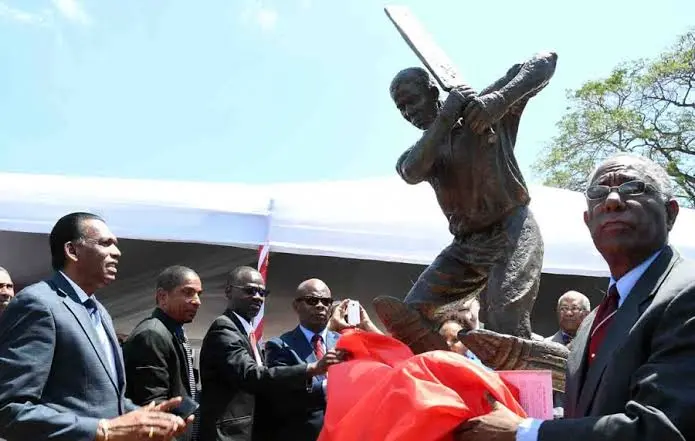
Cricket is fond of the unfinished career. It can turn a promising player into a limitless one because decline, injury, and ordinary bad form never arrive to edit the legend. Smith's case does not require much embroidery. He had already done enough to make the missing years hurt.
From Boys' Town to the West Indies
Smith came from Boys' Town in Kingston and played his cricket with an energy that made him difficult to file under one heading. He was a hard-hitting right-handed batsman, an attacking off-spinner, and an exceptional fielder. He was called "Mighty Mouse," a small man whose cricket occupied rather more space than he did. His religious faith and habit of reading lessons in church also produced another nickname, the "Wayside Preacher."
His rise was startling. In only his third first-class match, for Jamaica against the touring Australians in 1955, he made 169. West Indies put him directly into the Test side. Smith responded with 104 on debut at Sabina Park, reaching his century against an attack that included Keith Miller, Ray Lindwall, and Richie Benaud.
There were failures as well. A pair in his next Test brought an immediate axing, a reminder that selection was no gentler in the supposed golden days. He worked his way back and gradually made himself central to the team.
The 1957 tour of England showed what the full player might become. Smith made 161 in the first Test at Edgbaston and 168 at Trent Bridge in the third, in addition to bowling his off-spin and fielding magnificently. His performance earned him a place among four others as Wisden’s Cricketers of the Year, including Barbadian Clyde Walcott. On the 1958-59 tour of India, he completed the fifth Test in Delhi with an even hundred in the first innings and eight wickets, including figures of 5 for 90 in the second.
At the time of his death, he had played 26 Tests, scored 1,331 runs with four centuries, and taken 48 wickets. Those figures describe a good international all-rounder. They do not settle what he might have been.
Sobers, a former roommate, later wrote that Smith “was a greater all-rounder than I.” No assessment of Smith can carry more weight, although Sobers' grief also makes the judgement impossible to treat as a neutral piece of scouting. The point is not that Smith would certainly have surpassed the greatest all-rounder cricket produced. It is that the possibility did not sound ridiculous to Sobers.
The friend at the wheel
The tragedy cannot be told without Sobers, but Smith should not disappear inside somebody else's sorrow.
The three West Indians had been travelling to London for a charity match. Sobers was later convicted of careless driving, fined, and handed a one-month license suspension. He said that he had been dazzled by headlights. The legal details ended quickly. The private burden did not.
Smith and Sobers were close friends and natural contemporaries. Both had entered Test cricket in the mid-1950s as prodigiously gifted young Caribbean players. Sobers survived the crash and went on to build the career against which all all-rounders are still measured. Smith became permanently 26.
It is tempting to connect every later Sobers achievement to that morning, as though grief can be converted neatly into runs and wickets. Human lives do not work so obediently. What is clear is that Sobers carried Smith's memory for the rest of his life, cued by comments like “I am living for two men.” Sobers repeatedly spoke of the scale of the talent that had been lost.
Smith's body was returned to Jamaica. Tens of thousands came out for the funeral procession. The road beside Boys' Town was eventually named Collie Smith Drive. His grave at May Pen Cemetery describes him as a "Keen Cricketer, Unselfish Friend, Worthy Hero, Loyal Disciple, Happy Warrior."
The last two words became the title of a biography. They also capture why the story has never become only grim. Smith's surviving cricket is full of movement and possibility. He arrived in the West Indies side by making a century against Australia, attacked England in England, and months later finished the India series with the best of both worlds in every cricketer’s dream: a Test ton and a fifer.
We cannot know whether he would have become better than Sobers or even how long he would have remained in the side. The fairest remembrance is not to grant him imaginary statistics. It is to recognize that, by 26, he had already made the question worth asking.
On 9 September 1959, West Indies cricket did not merely lose a promising player. It lost the right to find out.
Sources