Today in History
The run-out Courtney Walsh refused to take
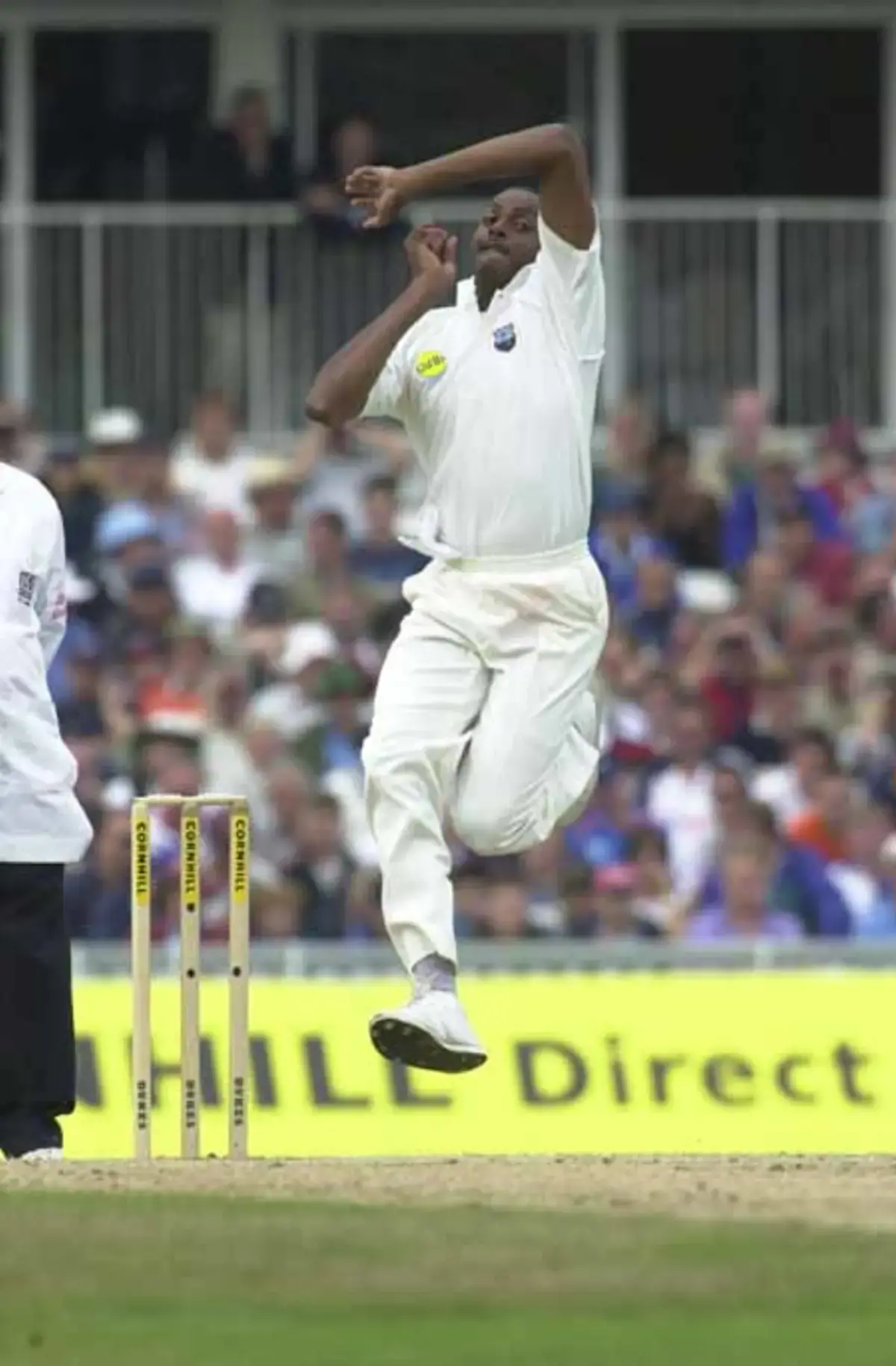
Courtney Walsh stopped in his delivery stride, turned towards the non-striker's stumps and found Saleem Jaffar stranded down the pitch.
The match was Walsh’s to end. Jaffar had left his ground too early, and Walsh was entitled to remove the bails. West Indies would win by one run. Pakistan's astonishing recovery would be wasted, and the points would have belonged to Viv Richards' team.
Instead, Walsh folded his arms and watched as Jaffar scrambled back. The fast bowler gave him a stare that required no translation and returned to his mark to once again prepare to bowl the final delivery, which Abdul Qadir sliced through point for the winning runs.
There may be better stories about sportsmanship and consequence. Cricket has been searching for one since October 16, 1987.
Fourteen from the final over
The World Cup match at Lahore had been tense long before that final over. West Indies had batted first and were dismissed for 216 with three balls unused. Phil Simmons made an even 50 on his ODI debut, while Richards added 51. Still, Imran Khan's four-for and three wickets from Saleem Jaffar limited West Indies to a target Pakistan would have fancied.
And they were indeed cruising at 91 for two before losing three wickets for 18 runs to slip to 110 for five. Wicketkeeper Saleem Yousuf then restored order to the innings with 56 off 49 balls. He fell to Walsh in a period when Pakistan lost three wickets for three runs, sliding to 203 for nine. Pakistan were in grave trouble.
It came down to the last over with the co-hosts needing 14 runs from six balls with just the one wicket remaining. Qadir was on strike. Jaffar, a bowler who had already done his main work for the day, was at the other end.
Qadir swung Walsh for six, followed by runs and an overthrow, bringing the equation down to two needed off one. Qadir was on strike again, and Jaffar was at the bowler's end.
The moment Jaffar backed up and Walsh stopped not only decided the result but it created a narrative.
The dismissal Walsh refused to effect is commonly called a "Mankad", after Vinoo Mankad ran out Bill Brown at the bowler's end in 1947. That label has always encouraged people to treat a legal run-out as a peculiar moral offence rather than an ordinary attempt to prevent a batsman stealing ground.
Under the laws, Walsh could have completed it. He chose not to. His gesture was immediately praised around the world. Pakistan's captain Imran Khan later presented him with a carpet.
Pakistan won by one wicket, while West Indies later failed to reach the semi-finals. Walsh’s warning had effectively "cost" them a place in the last four.
That version, however, is satisfying and too neat.
Sportsmanship is not arithmetic
West Indies still had three group matches after Lahore. They beat Sri Lanka and won the return fixture against Pakistan. They also lost twice to England, including the match at Jaipur that effectively ended their campaign. The failure to qualify cannot honestly be assigned to one delivery in the third match of a six-game group stage tournament.
Yet the four points lost at Lahore undeniably mattered. A run-out would have changed the table, altered the pressure on later matches and perhaps changed the outcome of the tournament—perhaps. Walsh knew the stakes. His restraint was meaningful precisely because it was not free.
Modern cricket has shifted towards a somewhat clearer view of responsibility. The non-striker is expected to remain behind the line until the ball is released, and the MCC has moved this form of dismissal from the category of unfair play into the ordinary run-out law. Many current players would complete the dismissal and consider the matter closed.
That does not make Walsh foolish. Nor does his choice establish a moral requirement for every bowler. It reveals his understanding of how he wanted to win.
West Indies cricket has often celebrated ruthlessness. The great teams of Walsh's era gave opponents no charitable route back into a match. At Lahore, one of their emerging fast bowlers drew a private line and refused to cross it, even while the World Cup moved against him.
Qadir scored the winning runs, and Pakistan eventually reached the semi-finals. West Indies missed them for the first time in four World Cups.
Walsh went on to take 519 Test wickets and become one of the most respected figures in the game. Of all the wickets available to him, among those most discussed is the one he declined.
Sources