Today in History
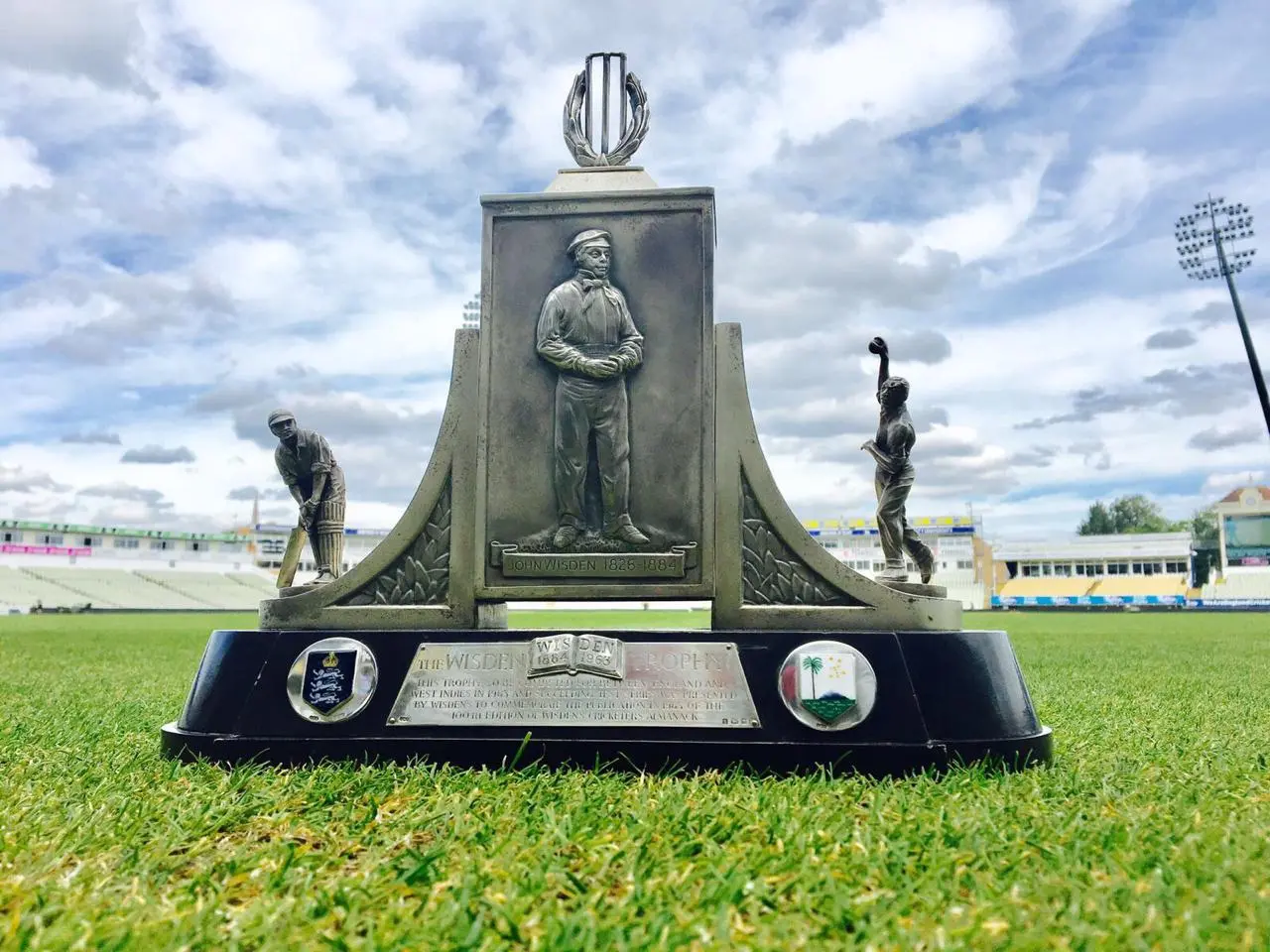
The day England finally took back the Wisden Trophy
Pakistan swept them 3-0 in Pakistan in ‘97, followed by a 5-0 drubbing away to South Africa 13 months later. West Indies’ batting was fragile, their administration quarrelsome and their old certainty absent.
Still, habits built over thirty years do not vanish when the rankings say they should. Both England and Jimmy Adams' team began the summer expecting a contest with history. The visitors then won the first Test at Edgbaston by an innings and 93 runs. Perhaps the weather had returned after all.
From Edgbaston to collapse
The series turned at Lord's. England won by 2 wickets, chasing 188 for victory after skittling the West Indies for 54 in the second innings. The spectacle was untidy, tense, and deeply important to a side relearning how to finish matches.
After a draw at Old Trafford, England won at Headingley inside two days. West Indies made 172 in their first innings and 61 in their second. The great fast-bowling partnership of Curtly Ambrose and Courtney Walsh was still good enough to cause damage, but no attack could defend totals that small forever.
England arrived at The Oval leading 2-1. A draw would have been enough to reclaim the trophy, yet the match became a confirmation rather than a technicality.
England made 281, built around Michael Atherton's 83. The West Indies replied with 125. Atherton then made 108, as England were bowled out for 217 in the second innings, leaving the West Indies 374 to win. They were dismissed for 215.
England won by 158 runs on 4 September and took the series 3-1. It was their first series victory over West Indies in 31 years.
Yet, the final morning carried another ending. Ambrose was playing his last Test. Walsh, already 37, took 34 wickets in the series and shared the player award with Darren Gough.
The two veterans had not been disgraced. In fact, Walsh had been the best bowler on either side. What disappeared at The Oval was the assumption that their presence alone could preserve the old order.
What actually ended
It is easy to make too much of one series, but West Indies’ supremacy had ended before 2000. England's victory did not cause the long decline that followed, nor were the English themselves suddenly a great side. They had been ranked rock-bottom in Test cricket only a year earlier.
What the result changed was perception. England stopped treating West Indies as an inherited trauma, retaining the Wisden Trophy three consecutive times thereafter. West Indies, on the other hand, could no longer explain defeats as temporary interruptions to a natural hierarchy.
A side with Lara, Ambrose and Walsh had been beaten not by Australia or South Africa this time, but by an England team still assembling itself under Nasser Hussain and Duncan Fletcher.
For Caribbean supporters, the loss felt less like a single bad tour and more like the arrival of a bill that had been accumulating for years. The production line of fast bowlers had slowed. The regional first-class structure was struggling to replace great batsmen, while selection and administration seemed permanently at war with stability. Lara undoubtedly remained capable of the miraculous, but a team cannot build its weekly shopping around miracles.
England's newspapers celebrated the recovery of the Wisden Trophy as the end of 31 years of hurt. From the West Indian side, the more sobering numbers were mostly single-digit. Five Tests, three defeats, and first-innings totals under 200 in three of them.
The empire did not fall at The Oval. Empires rarely have the courtesy of choosing one afternoon. This one had been retreating for some time. On this day, 26 years ago, England simply raised the flag over the abandoned position.
Sources: