Today in History
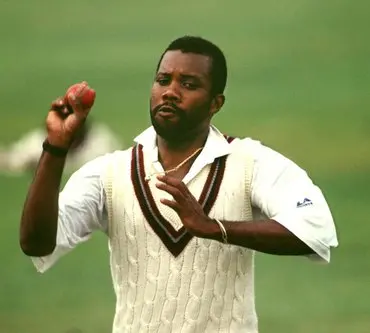
Forever 41: Remembering the great Malcolm Marshall
Marshall spent his career making batsmen feel that the pitch had become smaller. He was not built according to the preferred measurements of fast bowling, standing about five feet eleven. He was surrounded in the West Indies attack by the greater heights of Joel Garner, Michael Holding, and Colin Croft. He did not need their altitude. A unique action, late swing, skiddy bouncer, and exceptional control allowed him to extract danger from any surface.
He could move the new ball, cut the old one, and alter his angle without announcing the plan. He studied batsmen and remembered weaknesses. Pace was one weapon in a much larger arsenal.
The figures remain startling: 376 Test wickets at 20.94, 22 five-wicket hauls, and 1,651 first-class wickets at 19.10. Statistics place him among the greatest fast bowlers. The testimony of those who faced, played beside, and learned from him often removes the word "among."
On 4 November 1999, Marshall died from colon cancer in Bridgetown at the age of 41.
Learning to become Maco
Marshall's Test debut in India in December 1978 gave little warning of impending greatness. The West Indies were packed with pace options, and he was selected after limited first-class experience—he was 20 and raw. Marshall returned to Barbados and Hampshire and built himself into a complete bowler.
While at Hampshire, he bowled day after day in conditions far removed from the Caribbean, learned to manage spells, and developed the technical variety that made unhelpful pitches feel temporarily cooperative. He remained with the county for fourteen years and became as loved in Southampton as in Bridgetown.
By the 1983 tour of India, Marshall had become the leader of the West Indies attack. He took 33 wickets in six Tests. In England in 1984, with West Indies pursuing a 5-0 series victory, he broke his left thumb while fielding in the third Headingley Test. His hand was put in plaster.
He came out to bat one-handed so Larry Gomes could complete a century before returning to take seven for 53 in the second innings.
That story is often told as evidence of courage, which it is. It also shows his technical command. Unable to use his left hand normally in the action, he still controlled line, length, and movement well enough to dismantle a Test side.
At Old Trafford in 1988, he produced seven for 22 on a pitch Vic Richards accused groundsmen of deliberately over-watering to negate his quicks.
Marshall could bat as well. Ten Test fifties and a first-class average near 25 made him a genuine lower-order contributor. The grin was part of the package, but batsmen understood that the friendly expression did not extend to the next delivery.
The mentor West Indies lost
Marshall retired from international cricket in 1991 and continued playing and coaching. He worked with Hampshire, Natal, and the West Indies. Younger fast bowlers found an educator. Richie Richardson remembered him as a roommate, friend, strategic planner, and "a great teacher." Michael Holding, in the meantime, emphasized how much work lay behind the apparent natural brilliance.
That role made his illness especially cruel for West Indies cricket. The dominant team Marshall had served was receding. The next generation needed not simply inspiration but transmission: how to set up a batsman, how to train, how to use the crease, and how to remain fast across a long spell.
Marshall was coaching West Indies during the England-hosted 1999 World Cup when his illness became public. He underwent surgery before returning home. In September he married his long-time partner, Connie. Five weeks later he died.
At his funeral, thousands lined the streets. Former West Indies fast bowler and minister Wes Hall led the service. Past captains carried the coffin and Hampshire colleagues travelled to Barbados. The mourning crossed the same routes Marshall's cricket had travelled for two decades.
He left no need for sentimental inflation. His career average remains the best among West Indian bowlers with more than 200 Test wickets. More importantly, his methods survived in the cricketers he coached and in every discussion of what complete fast bowling looks like.
Marshall's death is the heaviest kind of anniversary because it contains two losses: cricket lost one of its finest bowlers, while West Indies lost him just as his knowledge had become more valuable than his pace.
Sources