Today in History
West Indies arrive in India as Weekes complete remarkable run of five straight Test tons
West Indies arrived in Delhi in November 1948 as a team still deciding what it might become. They had played Test cricket for twenty years but had contested only seven series, none in India.
The side was no longer merely a collection of talented colonial cricketers. George Headley had shown what a West Indian batsman could be. However, the war had interrupted international cricket, and a younger generation was forming around the Three Ws, Clyde Walcott, Everton Weekes, and Frank Worrell. Only two of them travelled to India; still, Walcott and Weekes made enough runs for three men.
West Indies won the toss on November 10 and batted. Walcott made 152, his first Test century. Gerry Gomez added 101, Weekes 128, and Robert Christiani 103. The West Indies were dismissed for 631 after nearly 184 overs.
India replied with 454, led by Hemu Adhikari's unbeaten 114. Asked to follow on, they reached 220 for six and saved the match. The first Test between the countries in India ended in a draw, but not before West Indies introduced the scale of batting India would confront throughout the series.
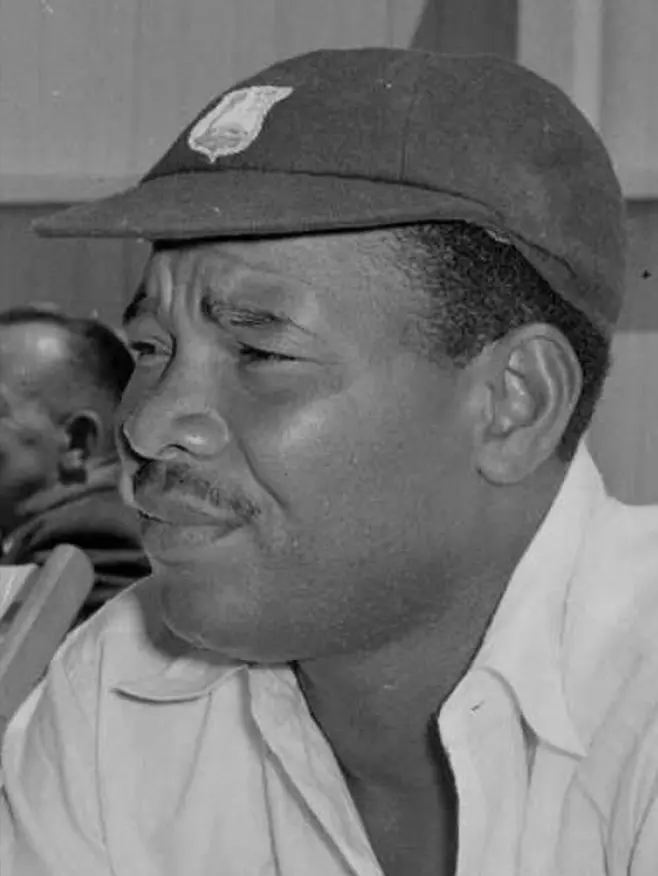
The second of five
Weekes' 128 was part of something larger. In his previous Test innings, against England at Sabina Park in March, he had made 141. In Delhi, he made 128. In the second Test at Bombay, he scored 194. In Kolkata, he made 162 and 101 in the same match.
Five consecutive Test centuries in five innings. The sequence remains the record.
It nearly became six. Weekes made 90 in Chennai before being run out in a decision that has remained controversial. He responded with the restraint expected of a touring batsman, then spent the rest of his life knowing that ten runs and one umpire stood between him and the chance to extend his record.
The India tour established Weekes as more than a gifted young batsman. He scored 779 runs in the five Tests at an average of 111.28. Indian crowds admired his compact technique and rapid scoring.
The Delhi match did not produce a result and is rarely placed among West Indies' famous Tests. Its importance lies in beginnings. It was the first Test of the first West Indian tour of India, Walcott's first hundred, and the moment Weekes' remarkable sequence became more than a coincidence.
West Indies made 631. India survived. A new rivalry began, and Everton Weekes carried on from where he had left off eight months earlier.
Sources