Today in History
Thirty-two for two, and then Marlon Samuels
After ten overs of a World Twenty20 final, West Indies had made 32 runs.
Johnson Charles was out for a duck while Chris Gayle, the great promise of immediate disorder, had spent 16 balls making three before Ajantha Mendis trapped him leg before. Sri Lanka were at home in Colombo, the R Premadasa crowd was waiting to celebrate, and West Indies appeared to have mistaken a final for a particularly cautious net.
Marlon Samuels was still there. That sentence has carried a surprising amount of West Indies cricket.
Samuels' career never followed an orderly line. It contained precocious talent, disciplinary trouble, long absences, languid brilliance and periods when his continued selection seemed to require a private explanation. On October 7, 2012, it all narrowed into one innings.
The over that changed the final
Sri Lanka's spinners controlled the first half. Mendis finished with figures of four for 12. Despite Dwayne Bravo’s run-a-ball 19, which helped Samuels repair the innings, 48 for two after 12 overs held little hope for a defensible total.
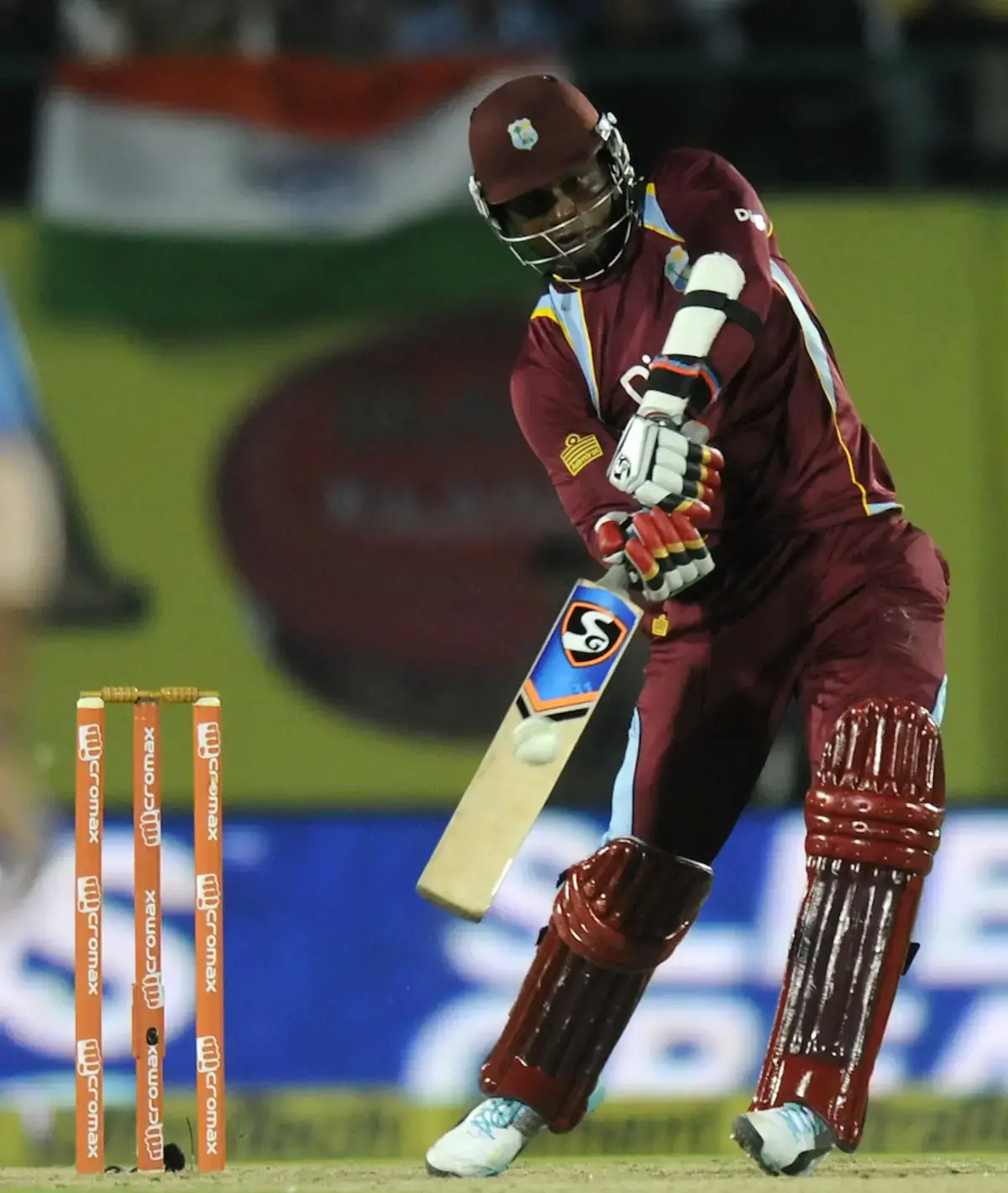
Samuels changed that argument by attacking the most famous fast bowler in the Sri Lankan side.
Lasith Malinga had built a career from yorkers, changes of pace and a curious release. Samuels struck him for three sixes in the 13th; the first went over midwicket, the next over extra cover, and the final blow cleared the leg-side region.
Malinga conceded 54 in his four overs, with Samuels scoring 39 from the eleven balls he faced. The Samuels-Bravo partnership ultimately reaped 59 runs for the third wicket.
Things did not become easier for the incoming batsmen. Kieron Pollard (2) and Andre Russell (0) fell in successive balls. After six maximums and three fours, Samuels was dismissed for 78 from 56 deliveries in the 18th with the score 108 for six.
Skipper Darren Sammy then supplied 26 not out from 15 balls to lift West Indies to 137 for six from their 20 overs. It was not a large total, but it was 105 more than they had at the halfway stage.
Sri Lanka's chase began with Ravi Rampaul bowling Tillakaratne Dilshan for a duck. Kumar Sangakkara and Mahela Jayawardene then set about a cautious rebuild. Against the spin trio of Samuel Badree, Sunil Narine and Samuels, their 42-run stand came at the expense of 50 balls and an ever-rising required run-rate.
Sangakkara fell with the score at 48. Angelo Mathews followed at 51. With the rate up to 8.4 runs per over, Jayawardene was out at 60, trying to manufacture a scoring option. The next wicket, that of Jeevan Mendis (3), fell one run later.
Sri Lanka went from control to panic with alarming efficiency. Narine finished with three for nine, Sammy took two for six, and the hosts were dismissed for 101 in 18.4 overs. West Indies won by 36 runs.
A team, a dance and a region
The celebrations carried their own soundtrack. The players gathered for the familiar Gangnam Style dance, a 2012 detail that dates the footage almost as precisely as the scoreboard does. Sammy lifted the trophy and spoke of the Caribbean celebrating.
Meanwhile, Samuels dedicated his performance to Jamaica and the West Indies. He had also bowled four overs, took one wicket and conceded 15 runs. There was no debate over the player of the match.
The title was West Indies' first senior world championship since the 1979 World Cup. The 2004 Champions Trophy had been an important global tournament, but this was a World Cup, won in a format increasingly associated with Caribbean players and Caribbean style.
Yet, West Indies had not swept through the competition. They lost their opening match to Australia before rain forced a no-result against Ireland. They were then comfortably beaten by Sri Lanka and needed a super over to defeat New Zealand in the Super Eight stage. Their campaign was survival followed by sudden conviction.
In the semi-final, they overwhelmed Australia with 205 for four. In the final, they rallied from 32 for two after ten overs. The team possessed stars, but its success came from different men at different moments: Gayle against Australia, Samuels against Sri Lanka, Narine with the ball, and captain Sammy, who was often discussed as the team’s least imposing player, holding together the group.
The victory also altered West Indies' relationship with T20 cricket. Caribbean cricketers had already become valuable in franchise leagues, sometimes creating friction with the regional board. The world title showed that those gifts could still be assembled under one maroon shirt.
Four years later West Indies would win the tournament again, this time with a finish so dramatic that 2012 could be treated as a preface. But not by those of us who sat through those moments. Moments that deserve better. Colombo was the night belief returned before the trophies became expected.
For ten overs, West Indies barely moved. Then Samuels began hitting Malinga into the stands, and an entire region got up to dance.
Sources