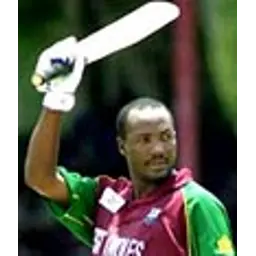
Lara's Return: Divine Intervention
(Trinidad Guardian)
Brian Lara is the latest of the series of leaders who have turned up, almost as though by divine intervention, when needed by West Indies cricket.
From the earliest Test days, there were players who were typically West Indian, Calypso Cricketers. They needed captains who understood the psychology of men who played, not just a cricket match but waged a struggle to assert their equality in a region where the ills of colonialism and racism denied them the rights, which their ?white? brothers enjoyed.
Thus, Learie Constantine, Clifford Roach, George Headley, were often in a game within a game, not in step with their captains.
World War II ended Constantine?s and Headley?s careers. Into the breech strode Frank Worrell and the W?s to carry the team?s fortunes on the strength of superb batting, even while it laboured under the racially driven insistence of white leadership. They dazzled the world with Calypso cricket in the 50?s, a style of batting, fielding and fast bowling that had everyone one excited, involved, disappointed at times but never bored.
The West Indies Test captains between 1928 and 1961 were all white.
By 1961, times had changed. Political awareness and struggle had seen WICBC forced to appoint its best captain ever, Frank Worrell to take the team to Australia.
Here was the first Calypso cricketer to captain West Indies. He understood the players, not only as cricketers, but as men involved in a struggle to assert their rights for recognition in the land of their birth.
Sobers followed and well as he played personally, he saw nothing but a game of cricket. He led the team from eminence to a despair. He was the first to lose to India in a Test match and led the team in 20 successive matches without victory between 1969 - ?73.
After his disastrous declaration against England in 1968 at the Q.P. Oval, he led West Indies in eight series without winning.
Kanhai led the team for a drawn series against England before Clive Lloyd took over and led a team that, for the first time since 1957, had neither Sobers nor Kanhai in it, to India in 1974.
Lloyd?s captaincy began with the West Indies in a trough. He got off the mark with victory in an enthralling series. He suffered a 5-1 drubbing at the hands of Greg Chappell?s Australians but learned from the experience.
In 1976, he instituted the four pronged pace attack against India. That has been West Indies preferred mode of attack ever since.
Lloyd won 36 of 72 Tests in which he was captain and built a team renowned for its fighting spirit, its splendid, reliable, aggressive cricket. It?s respect for itself and the responsibility it bore for the region?s fans and image, was paramount. It played to its best at all times.
Richards followed Lloyd. He never lost a series and handed the team to Richardson, who was captain when West Indies? unbeaten run ended in 1995.
Walsh could not inspire the team and amidst great controversy, Lara was named captain, rather prematurely.
His first spell, by his own admission, was filled with disappointment and dissatisfaction. He led an uprising against the WICB before the first ever tour to South Africa and saw his team soundly beaten. He lost 2-0 to New Zealand and gave up the captaincy to Jimmy Adams.
Adams was not up to the task and Carl Hooper, withdrawn, dead pan and uninspiring, was a disaster as captain. The selectors daringly recalled Lara as captain.
His performance this year was a tonic for the team and the region. Not only did he bat like the 'old' Lara, he handled his team in the field with the touch of an old master. He even prompted some inspired selections, not the least of which was Fidel Edwards.
Lara is in a position similar to Worrell and Lloyd, who took the team when it was at a low point and rebuilt it. He has started this second spell well and one looks forward to continued improvement.