Sons of the Sun (Pt 1)
(A father and son team goes to bat in a three-part series on the great Lara vs. Richards debate).Our arguments and disagreements carry us deep into the night. Sometimes we agree to disagree; most times we just fade away. Those close to us know that it is over cricket, of course. There is, however, one bruising battle that never ends, waged over a single question: Who is great and who is genius?
Let?s strip the argument of all its pretenses. What we are really asking is this: Was Vivian Richards a genius or a great player; is Brian Lara a great player or a genius?
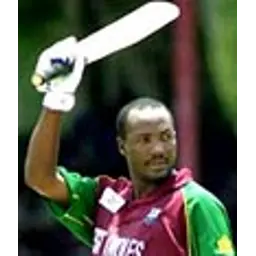
We see the world divided. Perhaps it?s an ideological thing; perhaps it could be a generational thing. There are those of Richards? time, who, awed by the ferocity of his batting assaults, and inspired by the single-mindedness of his politics, beheld Richards as their Shaka. And there are these of Lara?s time, driven by the sheer power of his numbers and the unmatchable aura that surrounds the shot making, for whom he is beyond mere princely status, but something engraved, Caesar like - B.C. LARA.
We scoured the material. From Cardus to Beckles; from Manley to Martin-Jenkins; from Hector to Roebuck; always being guided by the words of James, the prophet scribe. All shining authorities, these gentlemen. But we gleaned, through their works, the palpable flows of inner preferences. Cardus? didn?t help; he was a Sobers man. In an unforgettable Wisden tribute, written in 1967, Cardus declared: ?Garfield St. Auburn Sobers...the most renowned name of any cricketer since Bradman's high noon. He is, in fact, even more famous than Bradman ever was; for he is accomplished in every department of the game, and has exhibited his genius in all climes and conditions... We can safely agree that no player has proven versatility of skill as convincingly as Sobers has done, effortlessly, and after the manner born".
It is Beckles, purveyor of the third paradigm, who provides a troubling balance. In his ground-breaking work, The Development of West Indies Cricket Vol. 1, Beckles contends: ?When I met Viv Richards?and we became comrades, little did he know that I had exorcized my desire to be a West Indies cricketer through the soothing therapy of observing close up his exploits in Test and county cricket. He was magnificent; the most destructive batsman I ever saw. Respectful of opposing argument, I concluded then in 1980 that he was the best batsman against all types of bowling; I still believe this?. Beckles, in adding the other dimension to the Richards persona, further asserts: ?Richards, took into cricket much of what cricket had given to him. His cricket and his politics fused into an ideological force that shaped his genius and determined the principled positions adopted with respect to [the black consciousness movement]?.
But it is Lara that Beckles sees as leading the movement to the ?third rising? ? the new paradigm. Beckles declares of his new paradigm, ??the old ball game is dying and the new is struggling for space and recognition?globalizing transformations in the social order are refashioning the West Indies and a brand new ball game will be played.? In Beckles? esteem, Lara is the undoubted hero and symbol of this new order. He represents to the younger generation, i.e. the post-Richards generation, the ?triumphalist mentality? that is not intimidated by conservative authority.
Manley himself, devoted West Indies cricket supporter and articulate observer, was undecided. In his seminal work, The History of West Indies Cricket, Manley approaches the issue of greatness and genius by commenting on the futility of comparing Richards and Headley. Manley wrote, ?it is impossible for Viv Richards to walk to the wicket in the presence of a West Indies audience without an argument starting as to whether he is the greatest West Indian batsman since the Second World War. Comparisons are never made with Headley, as this would involve a form of l?se-majest? too terrible to contemplate. Some people have put themselves beyond comparison not only because they are the best, but because the niche that they occupy has become profoundly symbolic of things that go beyond the boundaries of what they do.?
To Manley, Lara is the embodiment of supreme batsmanship. ?Lara?s capacity for accumulation [has] evoked strong memories of Bradman and, at the same time, a new element surfacing that puts the historians in mind of both Bradman and George Headley?It is not only that he plays every shot in the book and some of his own creation, but that he [makes] batting look easy?.
Martin-Jenkins adds his voice to the debate. In his magnus opus entitled World Cricketers, Martin-Jenkins pens the following portrait of Richards: ?Vivi Richards goes down in history as one of the greatest of all time. Proud, fit and dignified, with a fine physique and an aquiline nose, he never wore a helmet, never shirked a challenge, and was always confident of his ability to come out on top of the best bowlers when conditions were equal. He could be emotional, even volatile, when his own, or West Indian supremacy was challenged, but he earned everyone?s respect in a long and high profile career. He played always not just for himself but also for the prestige of his country and his people at a time when black sportsmen everywhere were asserting their prowess.?
It is for Lara that Martin-Jenkins reserves his most technically incisive commentary. To him, Lara?s sublime skills are underpinned by steely wrists and excellent footwork and that have established him as an icon to all those who appreciate the aesthetics of batsmanship. Martin-Jenkins sees in Lara a master of technique, whose placement all around the wicket is unerring, whose attacking shots are unfurled from a flamboyant high backlift, and whose trademark whip stroke is played with ease and ?lan off the front and back foot. Martin-Jenkins probes deep into the Lara mystique...?at the crease and off the field, a handsome, shy smile adds greatly to the charm of a cricketer whose most serious threat after 1994 was likely to be too demanding an exploitation of his commercial potential?.
The thinking reader may have by now asked the question: If there is a Third Paradigm what were the first and second paradigms?
Beckles interprets the period 1890 to 1950 as a time of colonial domination where cricket was used to bolster the near-apartheid policy of black separation and exclusion. The second paradigm covers the period 1950 to 1990. It is characterized by the rise and fulfillment of anti-colonial movements that culminated in nationalism and independence. On the cricket fields, the seeds of such changes were sown by Headley and Constantine; watered by the 3W?s; and nurtured and harvested by Richards.
Hector?s was the voice of Caribbean nationalism - the conscience of the second paradigm. Historian, teacher, activist, cricket fan, Hector?s works place his keen and lifelong appreciation of cricket within a political and social context. More than that, he brought the discourse to the level of the ordinary cricket fan, who watched from the Kensington Stand, the Mindoo Phillip Park and the Concrete Stand. Through his newspaper articles, speeches and street corner conversations, he was ultimately Antigua-to-the-bone, and naturally, Vivi was his man. His language unashamedly bordered on hyperbole, but for him, it was exactly where Richards had to be located within the historical framework.
Two years before his death in 2002, Hector wrote these words: ?[Richards] was the most significant cricket person of the 20th century, coming from one of its peripheral colonial outposts to the very apogee of world civilization, by way of cricket? to represent the new stage. The demand for the black power stage. Reaching ?down into his inner depths of his own being? and with bat in hand, and through his ?assertive manhood? characterized by what was called his ?swagger? to the wicket, he signed his own emancipation proclamation in defiance of Lillee and Thompson, Chandrashekar and Bedi, Willis and Underwood, Imran Khan and Abdul Qadir, all ?with a spirit straining toward self-esteem?".
Hector is somewhat circumspect on the subject of Lara: ?It is not a question as to whether Lara is better than Richards. That is not at issue. Each in his own time. Each masters the problems of his time. In Richards? time, it was Lillee. Thompson and Pascoe, or Willis or Old, or Bedi, Chandrashekar and Prasanna. In Lara's time it is McGrath and Gillipsie, Donald and Pollock, Warne and McGill. Each in his own time, I repeat. And comparison, however exacting and exact, ignore the necessities of each time. So much for that. Richards was the premier batsman of his time. Lara is the premier batsman of this time?.
Roebuck?s personal problems with Richards, almost disqualified him. For many seasons he stood in the Somerset slips alongside Richards, Botham and Garner as their captain. But the fallout has rendered him uncharitable in his assessment of Richards. His is the journalist?s eye, however, his is the eloquent, acidly critical viewpoint. Where Hector can be accused of flirting with hyperbole, Roebuck is unflattering. ?[Richards?] game embraced a contempt for his fate, a foaming fury, because to him cricket was a game of kill or be killed, a street fighter in which it was left to the umpires to keep peace?.
In Lara, Roebuck like Manley, sees invocations of Bradman: ?Lara has always been capable of extraordinary feats. Not even Bradman [could] have batted better through a series than did Lara in Sri Lanka and against Australia in the Caribbean. Yet there has been a fragility about him, a willfulness that can produce magnificence upon the field and foolishness off it. Lara will go into the books as one of the greatest batsmen the game has known. As far as epitaphs go it is fine but insufficient. More is needed from him and in his moment of triumph Lara confronted that truth.?
It is here that we pause to ponder the route we have taken on this great debate. The single conclusion derived from the minds of the experts is a ?no-decision?. We are therefore compelled to recast the debate: Just who is/was the better batsman? The collaboration almost crashed upon this point. But disaster was averted. We did three things: first, we turned to James, the prophet scribe; secondly, we put the question to the men and women sitting on the cricket pastures, and in the stands and mounds around the Caribbean; finally, we leaned on the pillar of statistics.
To be continued?