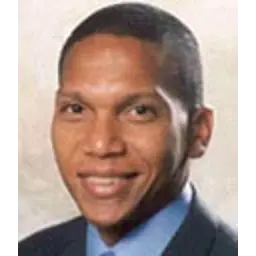
Cricket West Indies (CWI) Chief Executive Officer Chris Dehring has revealed that about 100 issues have been identified as contributors to the decline of West Indies cricket, with insufficient facilities, players’ skill deficiencies, and the quality of domestic competitions among the most pressing.
Dehring was speaking during a press conference on Monday following a high-level two-day emergency meeting convened by CWI President Dr Kishore Shallow. The meeting, which included current and former players, coaches, and officials, sought to chart a course for immediate reform of the regional game.
During the question-and-answer segment, Dehring was asked if any particular areas had been identified that needed urgent attention.
“Well, I think over the last two days we identified a list of maybe about 100 things that we have to improve,” Dehring replied. “But probably amongst the top five was facilities for the development of our cricketers. We’re talking about things like facilities at every level for the development of our cricketers, proper practice pitches across the region, the quality of our domestic tournaments would have been highlighted.”
AFTER MONTHS of taking a fair amount of battering on the international cricket scene, the Cricket West Indies hierarchy decided that something needed to happen fast, and as such, called on some of the best minds in the game to brainstorm and come up with working solutions that will help stop the haemorrhaging in the regional game.
A two-day emergency meeting ensued in Trinidad, with legends, the likes of Sir Clive Lloyd and Brian Lara, meeting with CWI management to flesh out solutions to some of the immediate problems plaguing the regional side.
Despite a less-than-stellar record as an all-format coach, Daren Sammy got the thumbs up from Sir Clive Lloyd regarding his presentation, which was made at the meeting.
With the current on-field performance woefully lacking, former captain Lara suggested that the region has to get up to speed with some of the bigger nations when it comes to how big a part technology plays in generating good performances.
Lara acknowledged that while West Indies once dominated world cricket through sheer skill, the game has evolved, and the region must adapt.
West Indies overcame Pakistan's spinners as well as the weather to power home by five wickets to level the ODI series 1-1. In a chase which ebbed and flowed, a blitz from Sherfane Rutherford and a controlled innings at the death by Roston Chase saw them home with ten balls to spare.
Their task was made significantly harder than it might have been when Jayden Seales' standout fast-bowling performance had restricted Pakistan to 171 for 7 in 37 overs. The target was slightly upwards (181 in 35 overs) of what was scored owing to multiple rain delays in the first innings.
Pakistan were put in to bat first and played stodgy cricket inconsistent with the decade they were playing in. Abdullah Shafique and Saim Ayub found the occasional powerplay boundary but interspersed it with strings of dot deliveries; the first ten overs had just five singles taken. When Seales' extra pace and Shai Hope's canny field placement extracted an outside edge from Ayub in the ninth over, it was the ninth successive ball the left-hand batter had faced that had not produced a run.
ST JOHN’S, Antigua - At the request of Cricket West Indies President Dr Kishore Shallow, an emergency meeting of the Cricket Strategy & Officiating Committee will convene from 10 to 11 August 2025, at the Hyatt Regency Trinidad to address critical challenges facing West Indies cricket and implement immediate structural reforms.
The two-day summit will bring together the Cricket Strategy & Officiating Committee, with such members as former West Indies players Dr Desmond Haynes, Shivnarine Chanderpaul and Ian Bradshaw, as well as special invitees Sir Clive Lloyd and Sir Vivian Richards. Also in attendance will be senior men's players and coaching staff led by head coach Daren Sammy.
Cricket West Indies Director of Cricket Miles Bascombe welcomed the imminent important discussions and value of heeding the President’s call to convene.
“This summit represents a critical turning point for West Indies cricket. We hope to engage in frank, honest and solutions-oriented discussions with coaches, former and current players, and administrators.” said Bascombe. “What we hope will emerge is a unified vision and a clearly defined, comprehensive framework designed to correct systemic inadequacies and close the performance gap at the elite level. This is not about quick fixes but identifying the structural reforms necessary across our development and high-performance systems, and strategic short and long-term initiatives required to drive the necessary change.”
Playing cricket for West Indies once meant something. That first cap was a proud moment and wearing the maroon afterwards was something to be cherished. Do youngsters in the Caribbean playing in their backyards, for their community teams or school teams still have those aspirations?
West Indies were once the kings of world cricket, dominating the 1980s and the first half of the 1990s. Prior to that, the world started taking notice of the quality of West Indies cricket, led by Sir Clive Lloyd. The regional team went to the inaugural World Cup tournament in England and returned home as heroes.
The performance of Lloyd's men lifted the spirits of the West Indians who walked with their heads high, even if it was just for the duration of the tournament.
Murray, in a recent interview with Newsday, reflected on the tournament and what it meant to represent the Caribbean people. The former TT player said, "We were conscious of that aspect of it. The diaspora were always proud of our achievements on the cricket field because that removed them from being second-class citizens wherever they were in the world, and I think it gave them a self-esteem that they could hold their heads up...
"Many were reduced to doing jobs that they were well overqualified for because of the stigmas that were attached at the time. We know from the 50s and 60s that we as cricketers had a responsibility to the diaspora and we were happy to do that."